What is hazardous waste?
Hazardous waste includes products or materials that are toxic, flammable, corrosive, reactive, infectious or radioactive.
Examples include:
- Acids and corrosive products
- Antifreeze and vehicle fluids
- Batteries, including lithium and lead-acid batteries
- Contaminated soil, gravel and sediment
- Dry-cleaning waste
- Fertilisers and pesticides
- Fluorescent lamps and ballasts
- Fuels
- Grease, lubricants and oil
- Laboratory chemicals
- Low-level radioactive waste
- Mercury-containing items
- Oxidisers
- Paint and thinners
- Refrigerants and gases
Do not place hazardous waste in your regular household garbage unless the guidance below specifically says you can.
Household hazardous waste
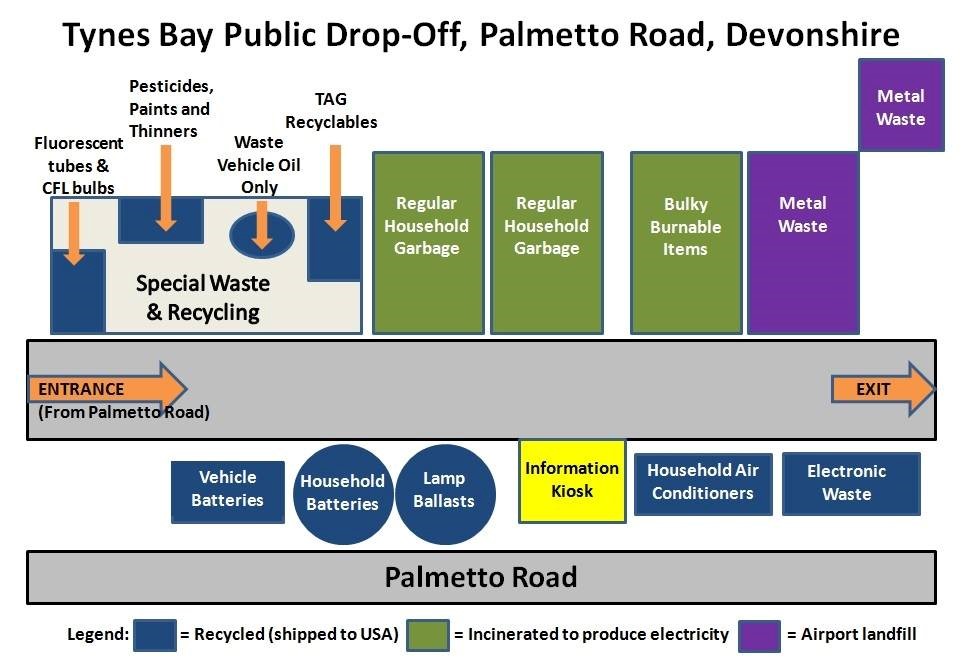
Residents can take household hazardous waste to the designated containers at the Tynes Bay Public Drop-Off.
View Tynes Bay drop-off information
If you are unsure how to dispose of an item, ask the Waste Management team.
Hazardous waste from a business
Businesses must contact the Solid Waste Management Section before disposing of commercial hazardous waste.
Ask about commercial hazardous-waste disposal
Asbestos waste
Asbestos must be removed, wrapped and transported by trained, licensed professionals. Bermuda’s asbestos handlers must be certified and follow the Government’s asbestos-receiving requirements.
Processed asbestos is packaged for export and taken to a licensed disposal facility in the United States.
Ask about asbestos handling and disposal
Cooking fats, oils and grease
Do not pour fats, cooking oil or grease down a drain. Hot water, soap and detergent do not remove them, and they can damage drainage and wastewater systems.
At home:
- Allow cooking fat, oil or grease to cool.
- Pour it into a can or sealed container.
- Put the closed container in your regular household garbage.
- Wipe grease and food debris from dishes and pans with a paper towel before washing them.
- Put the used paper towel and food scraps in the garbage.
Households can also take containers of used cooking oil to the Tynes Bay Public Drop-Off. Place them in household-waste bin 1 or 2.
Do not put cooking oil in the container marked “Motor Oil Only.”
Commercial quantities of used cooking oil can be taken to the Tynes Bay Waste-to-Energy Facility.
Vehicle fuels and fluids
The Special Waste Section provides a paid collection service for businesses that need to dispose of:
- Fuel
- Used motor oil
- Antifreeze
- Brake fluid
- Other vehicle-related liquids
Approved businesses may store these liquids in separate, labelled containers under licence from the Department of Environment and Natural Resources.