What do they do?
The Department of Environment and Natural Resources (DENR) will:
- Provide strategic direction and management in the formulation and implementation of legislation, policy and standards to protect Bermuda's environment
- Monitor and provide guidance for the prevention and control of pollution in the natural environment
- Manage marine activities so that they are carried out in a sustainable and responsible way
- Support Bermuda's agriculture and fisheries sectors through services and partnerships that help increase industry profitability and sustainability, while safeguarding the island's natural resources
- Research, conserve and promote awareness of Bermuda's terrestrial and marine biodiversity, protected species, threatened habitats and marine cultural heritage
- Conduct environmental education on Bermuda and other islands for visitors, locals and schools through engaging and entertaining exhibits at the Bermuda Aquarium, Museum and Zoo (BAMZ)
About the Department
The Department is unique within Government. It works in a dynamic collaboration using Government, charitable and volunteer resources.
Specialists from the Conservation Unit and BAMZ carry out research and ecological assessment, and develop recovery programmes, education publications and environmental policy and legislation.
The Natural History Museum and Library act as a repository for specimens and research publications, while the Aquarium and Zoo operates as a successful environmental education and visitor outreach vehicle.
The Bermuda Zoological Society (BZS) and Atlantic Conservation Partnership (ACP), as the formal charities for the Department, provide vital volunteer support, capital fundraising, delivery of the environmental education programmes, and direct support for local and visiting scientists and graduate students.
Online services
Pollution Control - Online Service Forms
Protected Species Licence for Scientific Research Application
Register a Petroleum Storage Tank
Renewing a Dog Licence
Report a Feral Bird on Your Property
Report sick or injured wildlife
Report the finding of a shipwreck
Scientific Research in Bermuda Application
Test Water for Horticultural Use Application
The Plant Protection Laboratory tests the suitability of water for use in horticultural applications. The test provides information on pH and dissolved soluble salts. You can also have your drinking water tested by the Government of Bermuda. What do I need to provide? A completed File Water Test for Horticultural Uses.pdf (65.38 KB) Deliver a sample of water in a clean container (not less than 8oz) to the Protection Laboratory for testing. Let the water run for 5 seconds before collecting the...
Red Imported Fire Ants (Solenopsis invicta)
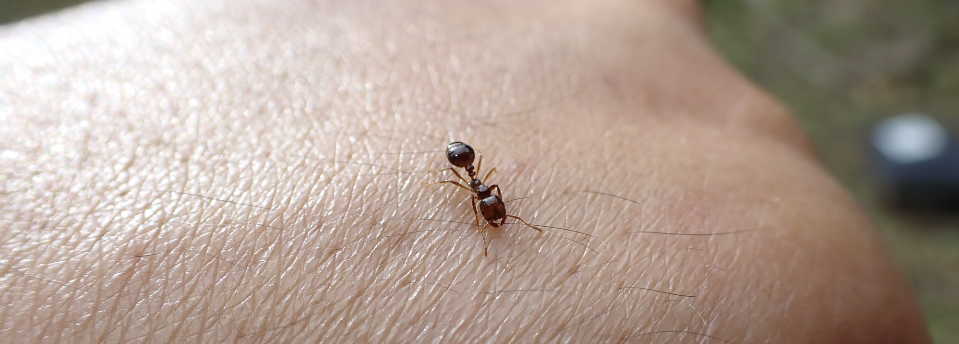
Credit: Miguel Mejias Red Imported Fire Ants (RIFA) are a highly invasive, non-native species to Bermuda. They were first reported at a private residence in Hamilton Parish in November 2025. A second colony was discovered on the cargo dock in the City of Hamilton a month later. Both colonies were promptly treated with approved insecticides, however the Department of Environment and Natural Resources is concerned that unreported fire ant colonies exist on Bermuda and eradication can only occur...
Open Shipwrecks and Protected Moorings Program
Bermuda's waters are home to at least 225 documented shipwrecks, though the true number remains uncertain. Estimates suggest there could be about 300 locations where entire vessels have come to rest, along with potentially just as many sites where ships faced trouble but didn't sink. Bermuda protects its shipwrecks and their associated relics that are older than 50 years through the Historic Wrecks Act. File Historic Wrecks Act 2001 (73.77 KB) The Government of Bermuda’s Historic Wreck and...
Recreational Fishing Rules
Bermuda's recreational fishing rules cover gear restrictions, no-net bays, spearfishing, lobster diving, and the penalties for violations. Anglers and divers are reminded to respect the ocean and follow the law.
Regulations pertaining to animals on Island
Dogs The acquisition, keeping, breeding, brokering of a dog and the use of a dog for guard/security work are regulated by legislation. Acquiring a dog A dog must originate from one of the following sources: (1) born in Bermuda under the authority of a breeding licence; (2) lawfully imported into Bermuda; (3) adopted from the Department; (4) adopted from a recognized society (i.e. the SPCA). When acquiring a dog locally, the seller, breeder or giver should provide you with a valid licence; do...
Vegetable planting guide
Growing your own vegetables? The growing season is determined by the time of year and what will grow best in Bermuda's climate and soil. This list provides the time of year best for various vegetables. Use the chart below to help plan your garden: Month What to plant January Beans, Beets, Broccoli, Brussel sprouts, Cabbage, Carrots, Cassava, Cauliflower, Celery, Chard, Christophine, Kale, Leeks, Lettuce, Mustard Greens, Potatoes, Radish, Rutabaga, Spinach, Squash, Tomato, Turnip. February...
Bermuda's Protected Species
Bermuda has a wide variety of plant and animal species in need of protection from the pressures of exploitation and development. The Department of Environment and Natural Resources oversees the recovery of these protected species through the development and implementation of recovery plans.