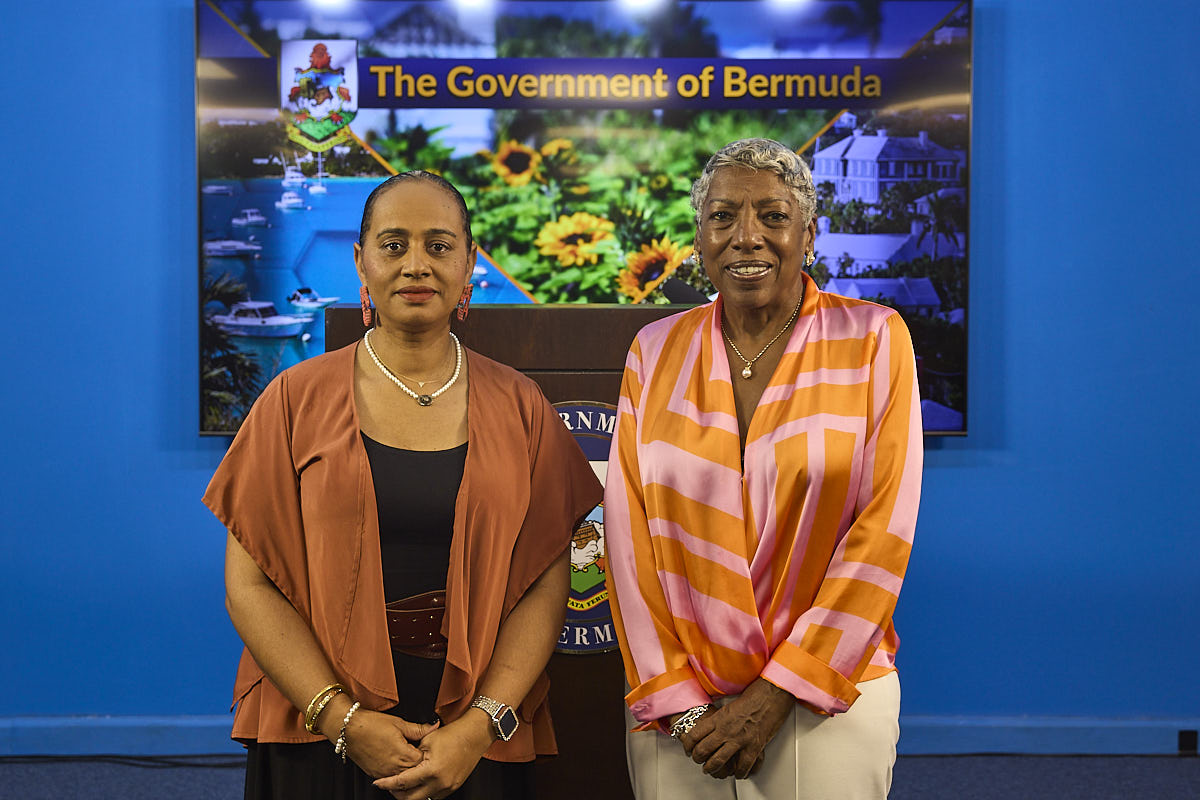
I am pleased to join my colleague, Minister Tinee Furbert, as Bermuda prepares to join the international community in recognising the International Day for the Elimination of Violence against Women tomorrow.
This occasion calls for us to examine how we ensure justice, protect
survivors and end impunity.
As Minister of Justice, I am particularly concerned with the legal protections available to victims, the accountability of perpetrators and the ability of our justice system to respond effectively.
Violence against women takes many forms. It includes sexual assault, harassment, intimidation, threats and other forms of abuse that can restrict the freedom, safety and dignity of women and girls.
One setting that deserves particular attention is the home, where domestic abuse continues to affect far too many families.
Domestic abuse is not exclusively experienced by women. Men can also be victims, and our laws must protect every individual who experiences abuse.
However, violence against women within intimate and family relationships remains a significant concern, making domestic abuse an important part of today's wider discussion.
Within the Ministry of Justice, we are pursuing several initiatives to
improve how our laws and courts respond to these circumstances.
An important development is the Domestic Violence Court Programme, which is now operating within our Magistrates' Court.
The objective is to ensure that domestic abuse matters receive focused attention, urgent cases are prioritised and victims can access legal protection without unnecessary delays.
While some supporting systems remain under development, this programme represents meaningful progress.
Another major priority is the development of a comprehensive Domestic Abuse Act.
This proposed legislation is intended to address gaps in our existing laws and provide clearer, more comprehensive protection for victims.
For example, we are examining how the law can better recognise coercive control and financial abuse, where an individual may be subjected to intimidation, isolation or financial restrictions without necessarily experiencing physical violence.
Most importantly, we are pursuing legislative changes to recognise children who witness domestic abuse as victims in their own right.
A child who repeatedly witnesses a parent being threatened or assaulted can experience serious emotional and psychological harm, even without being physically assaulted themselves.
We are also reviewing sentencing guidelines to ensure that courts have clear and consistent approaches which reflect the seriousness of the offending, the risks to victims and the need for accountability.
Another initiative involves the testing and procurement of electronic monitoring devices specifically for domestic abuse cases, alongside a review of the laws and policies governing their use.
These measures are being examined as additional safeguards, particularly where there is a risk of further harm.
Access to justice is another important priority.
The Ministry is reviewing barriers involving legal costs, delays and evidentiary requirements that can make it difficult for survivors to seek protection or participate in court proceedings.
This work will inform policy proposals aimed at making our justice processes more accessible, timely and sensitive to the experiences of victims.
I should emphasise that several of these reforms remain under development. There is further policy work, consultation and legislative drafting to be undertaken.
Nevertheless, the direction is clear. We are working towards a justice system that recognises abuse in all its forms, provides meaningful protection for victims and holds perpetrators accountable.
Ultimately, as Bermuda approaches this International Day, our progress must be measured by whether women and girls are safer, whether those experiencing violence can access justice and whether our institutions are responding as they should.
This is the work that we are committed to advancing. Thank you.